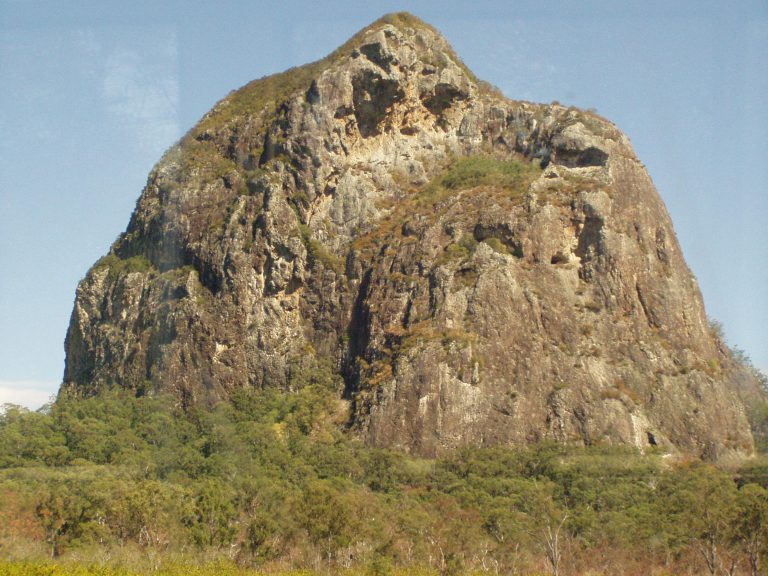
Excursion Report: Mount Tibrogargan Base Walk – Day Excursion, Sat 25 October 2025
Report by Delma Clifton
On a warm, humid day in late October, nine keen Naturalists gathered at the carpark at the base of Mt Tibrogargen at 9am. The walk around the base was moderately easy with a clear path and minimal step climbing. In true QNC style, it proceeded at approximately one kilometre per hour and we arrived back in the carpark around 12.30 for lunch.
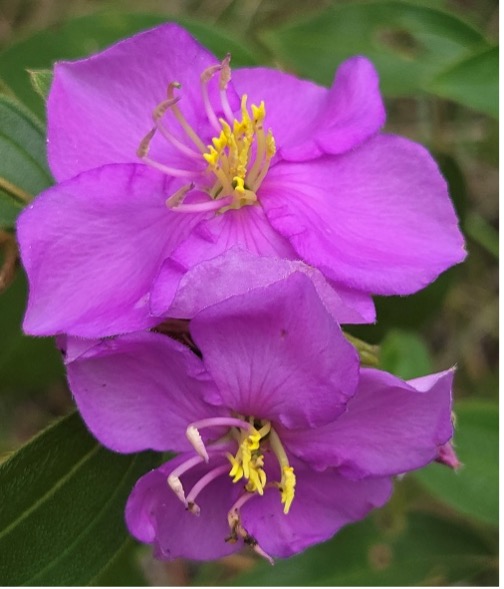
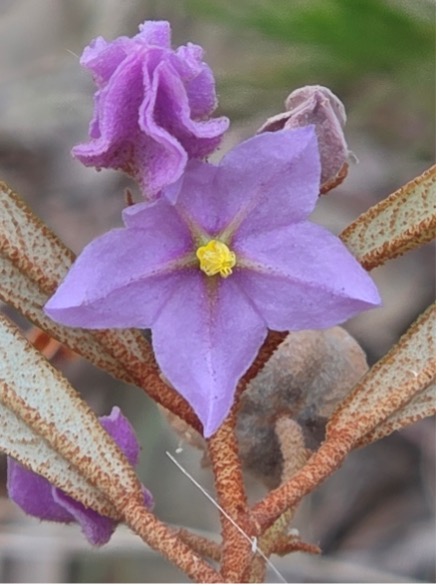
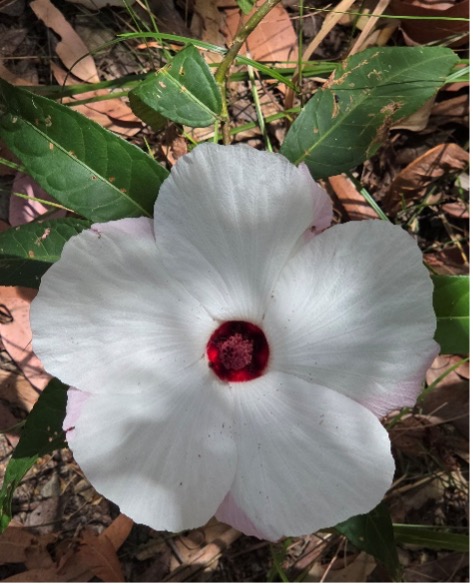
Being a little later in Spring, and following a very dry winter, there were not many species flowering at this time. However, we still managed to record 92 species of plants. The most prolific flowers were Melastoma malabathricum, Seringia hillii (mountain fire-bush), and Hibiscus heterophyllus. Photos of these plants in flower shown first three photos RHS column.
Combining the eBird lists from Penny and Terry, we heard or saw 22 species of birds (mostly heard – they were being very elusive). See combined list below:
| • Red-browed finch | • Noisy miner | • Brush turkey |
| • Black cockatoo | • Striated pardalote | • Sulphur crested cockatoo |
| • Eastern yellow robin | • Rufous whistler | • Rufous fantail |
| • Grey butcherbird | • Pied currawong | • Little corella |
| • King parrot | • Rainbow lorikeet | • White throated treecreeper |
| • Fairywren | • Lewins honeyeater | • White browed scrubwren |
| • Brown thornbill | • Black-faced cuckooshrike | • Eastern whipbird |
| • Grey shrikethrush |
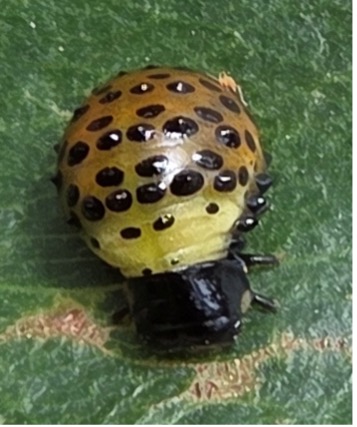
We also found an unidentified organic object. I uploaded these photos onto iNaturalist and got the following comment from Vireya Jacquard:
It is made by the caterpillar of something – I’ve seen others but can’t remember what it is, and the iNat CV doesn’t seem to know about it yet
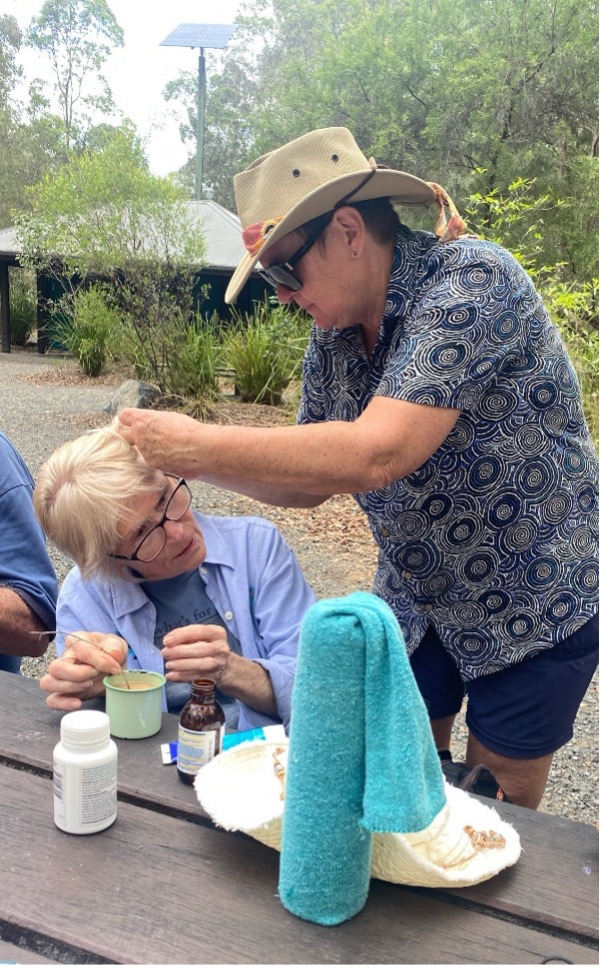
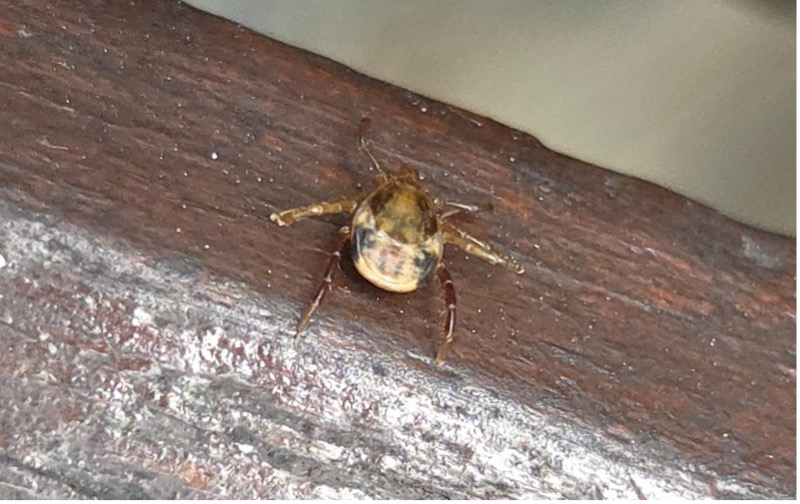
Back in the carpark, there was one last invertebrate to identify, but first I needed to remove it from Lil’s head. We made sure to photograph it before squashing it – a paralysis tick.